
Estimate
TWD 11,000,000-22,000,000
HKD 2,696,000-5,392,000
USD 345,200-690,300
CNY 2,381,000-4,762,000
Sold Price
Signature
Signed lower right XU BING
With one seal of the artist
ROVENANCE
Ravenel, Taipei, December 5, 2010, lot 185
Acquired from the above by the present owner
With one seal of the artist
ROVENANCE
Ravenel, Taipei, December 5, 2010, lot 185
Acquired from the above by the present owner
+ OVERVIEW
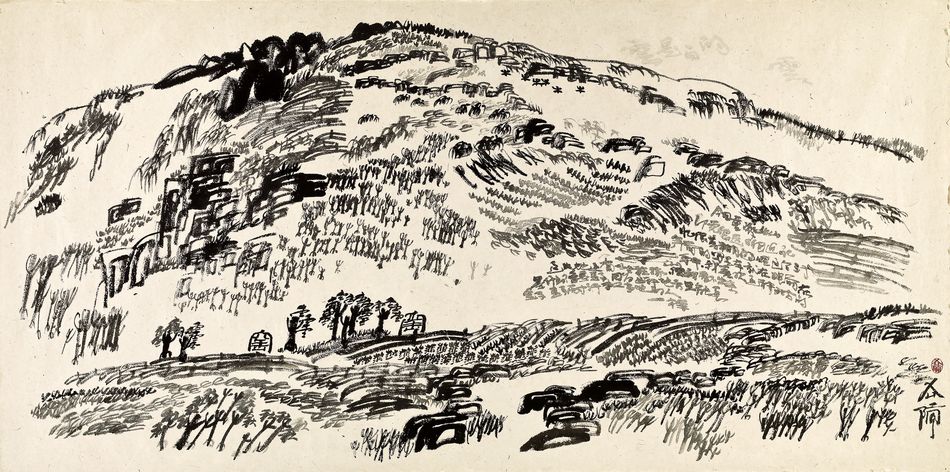
Xu Bing (b. 1955, Chongqing) stands among the most internationally influential figures in contemporary Chinese art. A graduate of the Printmaking Department at the Central Academy of Fine Arts, Beijing (1981), Xu is distinguished by his rigorous command of form and his incisive exploration of the nature of language. By the 1990s, his artistic achievements had already been canonized in leading art historical publications, including Art Past, Art Present and other authoritative surveys of global art.In 1990, Xu Bing relocated to the United States at the invitation of the University of Wisconsin. In 1999, in recognition of his groundbreaking transformation of traditional Chinese printing and calligraphy into a contemporary idiom, he was awarded the prestigious MacArthur Fellowship. This was followed by a series of major international honors, including the Fukuoka Asian Culture Prize (2003), the BALTIC Centre for Contemporary Art’s International Award (commonly known as the “Artes Mundi Prize”) (2004), and the Lifetime Achievement Award from the Southern Graphics Council International (2006). Since returning to China in 2008, Xu has served as Vice President of the Central Academy of Fine Arts and Chairman of its Academic Committee, and continues to maintain an active practice between Beijing and New York. The monumental work presented in this sale, Landscript (2004), represents a consummate articulation of Xu Bing’s
lifelong engagement with the concept of the shared origins
of calligraphy and painting. At first glance, the composition
evokes the poetic expansiveness of classical Chinese literati
landscape; upon closer inspection, however, the entire scene
is meticulously constructed from pictographic elements such as “mountain,” “cloud,” “stone,” and “grass.” For Xu, language constitutes the most fundamental structure of human thought. Its transformation is, in essence, a reconfiguration of cognition itself. By returning written forms to their pictographic origins, the artist transcends culturalboundaries, proposing a universally legible visual language. Embedded within the work is a deeply personal dimension. Xu Bing inscribed in a reflective, almost diaristic tone: “The clouds are white… my memory is indistinct, yet the sketchbooks from thirty years ago remain vivid before my eyes… beans are drought-resistant, much like the people there.” This passage recalls his formative experiences during the “Down to the Countryside” movement, while also resonating with his Himalayan sketching project of 1999— both of which underscore a sustained dialogue between nature, memory, and cultural identity. Xu Bing’s works are held in the permanent collections of major museums and institutions worldwide, underscoring his dual significance within both academic discourse and the international collecting sphere. In the Americas, his works
are represented in the collections of the Museum of Modern Art, New York (MoMA); The Metropolitan Museum of Art; the Museum of Contemporary Art, Los Angeles (MOCA); the San Francisco Museum of Modern Art (SFMOMA); the Harvard Art Museums; the Princeton University Art Museum; and the Seattle Art Museum. In Europe, his works are held by the British Museum, London, and Museum Ludwig, Cologne. In Asia and Australia, his works are included in the collections of the National Art Museum of China, Beijing; the Fukuoka Asian Art Museum; the Art Gallery of New South Wales, Sydney;
and the Queensland Art Gallery.
lifelong engagement with the concept of the shared origins
of calligraphy and painting. At first glance, the composition
evokes the poetic expansiveness of classical Chinese literati
landscape; upon closer inspection, however, the entire scene
is meticulously constructed from pictographic elements such as “mountain,” “cloud,” “stone,” and “grass.” For Xu, language constitutes the most fundamental structure of human thought. Its transformation is, in essence, a reconfiguration of cognition itself. By returning written forms to their pictographic origins, the artist transcends culturalboundaries, proposing a universally legible visual language. Embedded within the work is a deeply personal dimension. Xu Bing inscribed in a reflective, almost diaristic tone: “The clouds are white… my memory is indistinct, yet the sketchbooks from thirty years ago remain vivid before my eyes… beans are drought-resistant, much like the people there.” This passage recalls his formative experiences during the “Down to the Countryside” movement, while also resonating with his Himalayan sketching project of 1999— both of which underscore a sustained dialogue between nature, memory, and cultural identity. Xu Bing’s works are held in the permanent collections of major museums and institutions worldwide, underscoring his dual significance within both academic discourse and the international collecting sphere. In the Americas, his works
are represented in the collections of the Museum of Modern Art, New York (MoMA); The Metropolitan Museum of Art; the Museum of Contemporary Art, Los Angeles (MOCA); the San Francisco Museum of Modern Art (SFMOMA); the Harvard Art Museums; the Princeton University Art Museum; and the Seattle Art Museum. In Europe, his works are held by the British Museum, London, and Museum Ludwig, Cologne. In Asia and Australia, his works are included in the collections of the National Art Museum of China, Beijing; the Fukuoka Asian Art Museum; the Art Gallery of New South Wales, Sydney;
and the Queensland Art Gallery.
Related Info
Modern & Contemporary Art
Ravenel Spring Auction 2026 Taipei
Sunday, May 24, 2026, 1:30pm